
Hydrological Evidence Collection, Flood Protection, Structural Safety in the Field of Hydropower Plants
Users:
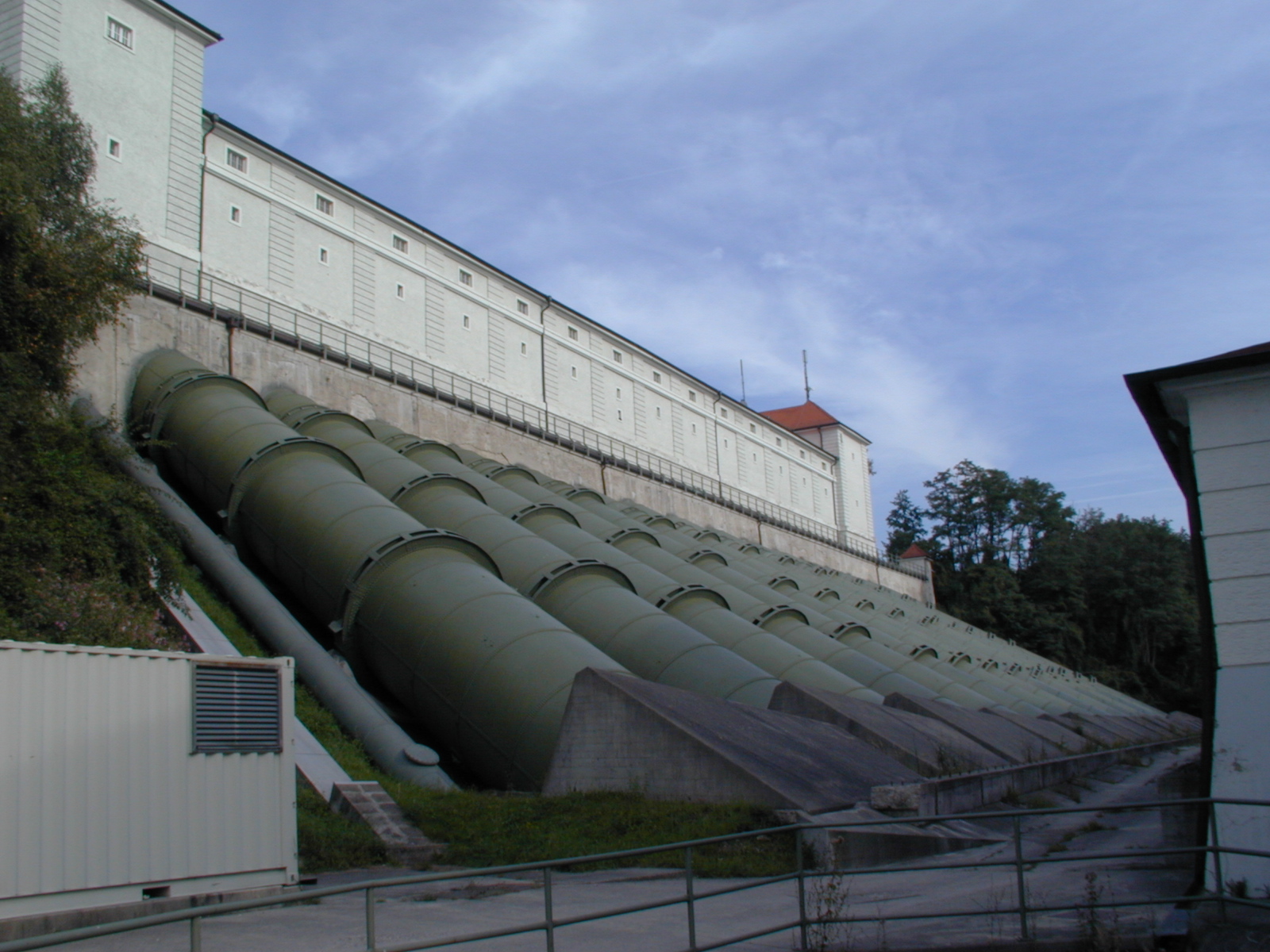
The two companies, UNIPER and Verbund-Innkraftwerke, operate 118 hydropower plants in Germany.
Most of these plants are run-of-river, producing electricity around the clock and available at any time. Storage and pumped-storage plants, which can feed power into the grid within seconds, complete the plant portfolio.
Hydropower plays a special role among renewable energies because it is reliably available 24/7. Combined, the two companies generate approximately 10 billion kilowatt-hours of electricity with their hydropower plants—enough to cover the annual consumption of over 2 million private households.


Task Definition:
The tasks can be summarized into three areas:
Hydrological Evidence Collection:
This is required in water law permits. It primarily involves providing accountability through data to prove damage or no damage in court. Water management authorities also benefit, as they can request the data when needed.
Flood protection:
This mainly involves engineering offices creating flood modeling from the data archive. Additionally, dams and dikes need to be adapted to current climate change conditions (HQ10 / HQ100 / HQ1000).
Structural safety:
Here, the focus is on measuring base water pressure (power plant) and seepage lines (water levels in dams), as well as seepage water.
The base water pressure ensures structural stability and serves the building’s static integrity.
At the time of construction, the weight of the structure was calculated in relation to the reservoir water pressure and the then-existing groundwater pressure.
If the groundwater level rises, the calculated structural stability could be compromised, as higher groundwater pressure exerts additional load on the foundation.
Similarly, seepage water levels in dams must be continuously monitored to ensure dam stability.
Problems to be Solved:
In the early days of gauge measurement, staff had to be on-site constantly to manually determine and log water levels.
Later, the first data loggers were installed, but data still had to be read periodically on-site using laptops or specialized reading devices.
Additionally, water law permits required that, for example, 75% of measurement points undergo a 28-day manual check, and 23% a 14-day check.
With approximately 1,500 measurement points across both companies, the personnel and cost effort was immense.
Another problem was data gaps caused by defective, damaged, flooded, or vandalized measurement stations.
Users refer to this as data quality.
These data gaps were usually only detected during the next periodic data readout of the measurement point.
Customer Requirements:
- Autonomously operating system with long battery life
- Automatic data transfer to the Internet
- Independent verification of measured values
- Alarm in case of data loss
- Vandalism resistance
- Robust and flood-proof hardware
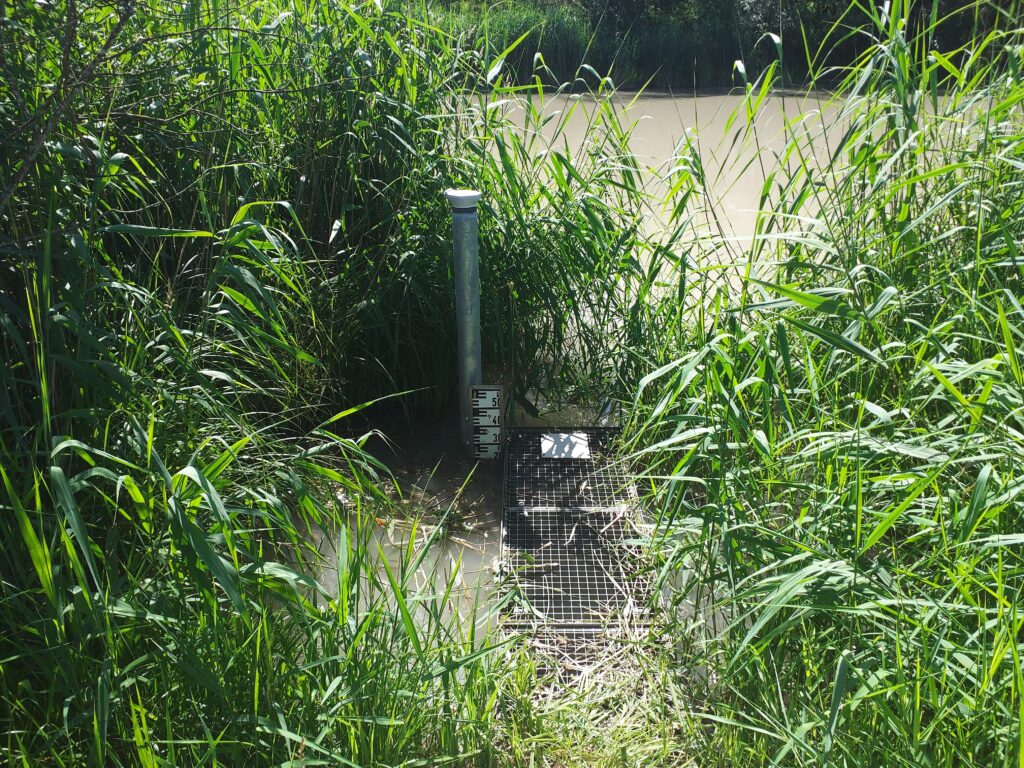
River level measurement: data loggers and sensors installed in the level tube at the jetty

Groundwater measurement in the dam

Sole pressure measurement for structural safety
Implemantation:
Since 2004, ACS-Control-System has equipped measurement points at both companies with water level sensors and data loggers.
Initially, these were primarily data loggers without remote data transmission.
Since 2019, existing measurement points have been upgraded to the new IoT system from ACS-Control-System.
A typical measurement point consists of a hydrostatic pressure sensor, an ultrasonic or radar sensor, and a data logger.
Hydrostatic pressure probes, with capacitive ceramic measuring cells fully enclosed in stainless steel housings, combine the accuracy and long-term stability of the measuring cell with robustness against mechanical damage.
These sensors determine the water level at the measurement point via hydrostatic water pressure.
The ultrasonic or radar sensor, also installed at the measurement point, is used to cyclically obtain a reference measurement of the water level.
This patented setup allows automatic verification of measured values, minimizing on-site control measurements.
If the two readings deviate beyond a user-defined tolerance, an automatic alarm is triggered.
The data loggers are equipped with the latest remote transmission modules. They transmit data via LTE-M and NB-IoT networks directly to the web cloud through a VPN tunnel.
The system is user-friendly and can be easily configured and started on-site via Bluetooth using a free app.
Embedded eSIM cards ensure data transmission across Europe with all providers, eliminating the need for the customer to provide SIM cards or mobile contracts.
Energy consumption of the entire sensor and data logger system has been optimized so that, in standard configuration, battery life often exceeds 10 years.
UNIPER and VERBUND-Innkraftwerke primarily use the ACS web portal as a service platform for their measurement points. Here, measured values can be quickly and effectively analyzed and compared with other measurement points.
The ACS portal does not only store measurements but also allows users to change device parameters, display photos of measurement points, send alarms, show locations via Google Maps, etc.
The ACS portal is highly valued by users, as it immediately shows which measurement points are, for example, in alarm, completely offline (e.g., due to flood damage), or simply require maintenance.
From the ACS web portal, measurement data is forwarded promptly to the companies’ servers. This data is transmitted in the widely used zrxp format in water management.

Benefits:
- No external power supply required
- Long battery life
- Simple on-site operation via Bluetooth and free app
- Self-verifying measurements; minimal control measurements needed
- Complete solution from sensor to web cloud
- Data protection concept according to latest guidelines; critical infrastructure
- Constant access to measurements and parameters via Internet
- Quick overview of all measurement points’ status
- Multiple alarm options
- Automatic export of data to customer IT infrastructure
- High data quality through self-monitoring measurement points
- Robust measurement system, flood-proof